


9 Steps to Prepare for Your First Architect Meeting
Last Updated: November 1, 2026
Quick Summary
To prepare for an architect consultation, define your project goals and rank your priorities, then gather existing plans, photographs and site details. Set a realistic budget that covers construction, fees, VAT and statutory charges. Bring a short written brief and a list of questions to ask.
Write down your project goals and rank them by priority before the meeting.
Gather existing plans, photographs, measurements and any planning or heritage details.
State an all-in budget range that includes fees, VAT and statutory charges.
Ask for a written fee structure and confirm which costs sit outside the design fee.
Bring a half-page design brief with reference images showing the look you want.
Table of Contents
Preparing for your first architect meeting can shape the whole outcome of your project. A well-prepared client gets a clearer design, a more realistic budget and a stronger working relationship from the start. This guide walks you through the steps to take before you sit down with an architect.
Think of the first meeting as the foundation for everything that follows. The clearer you are about what you want, the sooner an architect can test whether your ideas are practical. Most people arrive with a vague picture of the finished house. Fewer arrive with the facts an architect needs to start designing.
Why Preparation Changes the Outcome of Your First Architect Meeting
Preparation turns a general conversation into a useful working session. Without it, the meeting can drift into broad ideas that take weeks to pin down. With it, you can cover the important points in one sitting.
A few things improve when you prepare:
Design direction becomes clearer, so early concepts match what you want.
Budget discussions are more honest, because the numbers are based on real goals.
Feasibility is tested early, before you spend money on detailed drawings.
Trust builds faster, since you show you have thought the project through.
A common mistake is assuming the architect will work out your needs for you. They can guide you, but they need your input first.
Step 1: Define Your Project Goals and Priorities
Start by writing down what you want the project to achieve. Be specific about the problems you are solving and the life you want the space to support.
Ask yourself these questions:
What must the new space do for daily life?
Which rooms or features matter most?
What would make the project a success in five years?
Which parts are flexible, and which are non-negotiable?
Rank your priorities. If you want a larger kitchen, a home office and better light, decide which one matters most. This ranking helps an architect make trade-offs when the budget or site limits your options.
Watch out: Listing every wish without ranking them can leave an architect unsure where to focus. A short, ranked list is far more useful.
Step 2: Gather the Information an Architect Needs
Architects work faster and more accurately when you bring key information. You do not need perfect documents, but the basics help a lot.
Useful items to gather include:
Existing plans of the house or building, if you have them
Photographs of the property, inside and out
Measurements of rooms or the site, if known
Site details, such as access, orientation and boundaries
Planning history, including any previous applications
Details of any listing if the building is historic
If you own a listed or heritage property, mention this early. Heritage rules can shape what is possible, and the architect should know from the start.
Step 3: Set a Realistic Budget and Understand Fee Structures
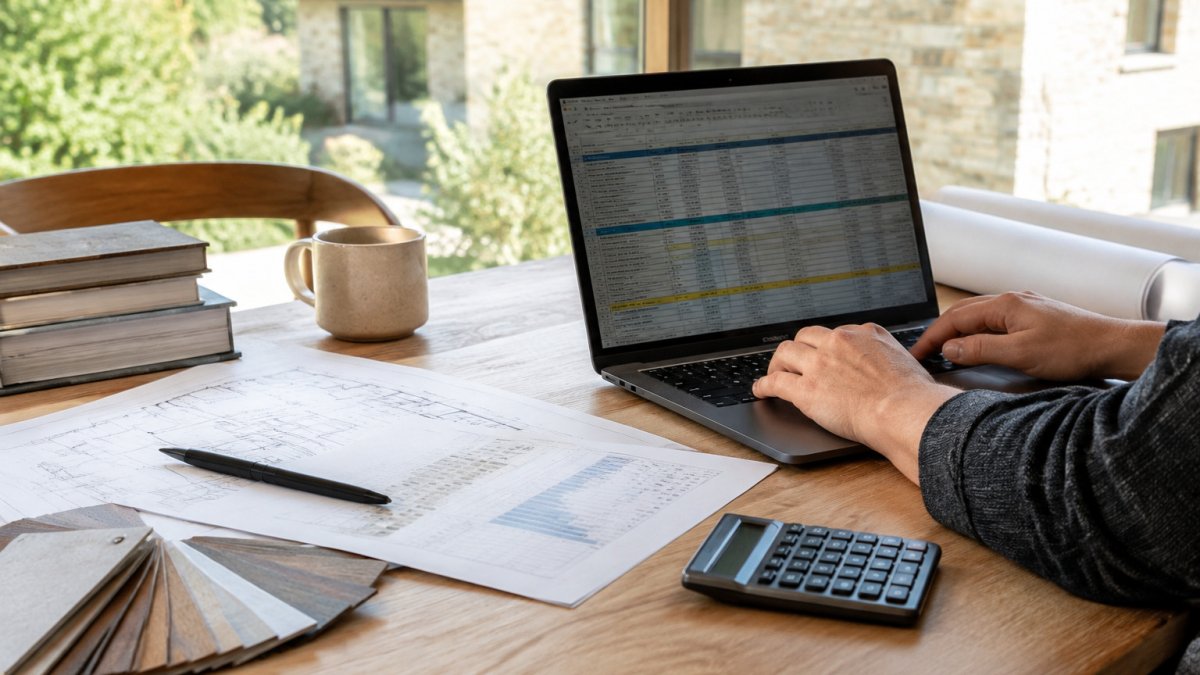
Before the meeting, decide what you can afford and how you want to pay for the project. Architects often ask about budget because it shapes the design from the beginning. A realistic budget conversation needs to separate construction cost from professional fees, statutory charges and VAT, because each behaves differently. Establishing these financial boundaries early provides a clear framework that remains equally vital when you eventually move toward an interior design consultation.
Be ready to discuss:
Your total budget for construction and fees, stated as a range rather than a single figure
Contingency for unexpected costs, sized to the age and complexity of the property
Fee structures, such as a fixed fee, a percentage of build cost, or hourly rates
VAT, most architectural services are subject to VAT at the standard rate, so confirm whether quoted fees include it
Statutory fees, planning application fees and Building Regulations application fees are paid to the local authority, not the architect, and should sit outside the design fee
Ask how fees are structured and what each stage covers. Many practices tie fees to the RIBA Plan of Work stages, so you can see what you are paying for at each point. A stage-linked fee schedule makes it easier to pause or stop the project without paying for work you have not received.
Pro Tip Ask the architect to confirm in writing which statutory fees, surveys and consultant costs (structural engineer, party wall surveyor, energy assessor) sit outside their fee. These third-party costs can add a meaningful amount to the overall budget and are easy to overlook.
Pricing depends on the scope of work, the complexity of the site and the services you need. For current fees, ask for a written quote based on your project. Accolade will discuss costs directly once it understands your brief.
Watch out: Quoting a construction budget that excludes fees, VAT and statutory charges is one of the most common preparation mistakes. It leads to designs that cannot be built within the money available. State your all-in figure and let the architect help you allocate it.
Architect Consultation Checklist: What to Bring and Prepare
Use this checklist to make the meeting productive:

Your ranked list of project goals
A rough budget range and your funding position
Existing plans, photographs and measurements
Information about planning constraints or heritage status
Examples of spaces or styles you like
A timeline showing when you need the project finished
A list of questions to ask the architect
Notes on who else is involved, such as family members or other decision-makers
Bring the list with you, or share it before the meeting. Architects appreciate clients who arrive organised.
Questions to Ask an Architect at the First Meeting
Good questions help you judge whether an architect suits your project. Focus on experience, process and practical concerns.
Consider asking:
Have you designed projects similar to mine?
How do you approach the design process from concept to completion?
How do you keep designs within budget?
What is your fee structure, and what does it cover?
How do you work with planning and building regulations?
What is the likely timeline for each stage?
How often will we meet, and how will we communicate?
What happens if the project proves unfeasible?
Listen for clear, direct answers. Our guide to choosing an architect for a bespoke barn conversion explains what else to weigh. Vague replies about experience or process can be a warning sign.
Using Architectural Design Brief Examples to Frame Your Vision
A design brief is a short written summary of what you want. It helps an architect understand your needs before drawing anything.
A simple brief can follow this structure:
Project: Single-storey rear extension to a Cotswolds stone cottage Purpose: A kitchen and dining room with better light and garden access Must-haves: Open-plan layout, a utility space, sustainable heating Constraints: Conservation area, sloping garden, budget of a set figure Style: Contemporary design that respects the existing stone and roofline Timeline: Planning submission within six months
Fill in your own details. Even a half-page brief gives an architect a strong starting point. Pair it with photographs and any reference images that show the look you want.
What Happens After an Initial Architect Consultation
After the first meeting, the architect should be able to tell you whether the project is feasible and what the next steps are. Expect some follow-up before any design work begins. This is also the point where you should compare architects consistently, rather than relying on how pleasant the meeting felt.
Typically, the architect will:
Summarise the points discussed in writing
Confirm what information is still needed, such as a measured survey or a site visit
Outline the proposed services and fees
Suggest the next stage, such as a site visit, concept sketches or a formal appointment
If the project is not feasible as described, a good architect will say so and explain why. You may then adjust the scope, budget or timeline rather than losing money on unworkable designs.
How to Compare Architects After the Meeting
Use the same scorecard for every architect you meet, so the comparison is fair. Consider:
Relevant experience, have they delivered projects of your type, scale and planning context?
Listening and communication, did they ask good questions and explain things clearly?
Scope and deliverables, is it clear what you get at each stage?
Fee transparency, are fees, VAT and exclusions stated in writing?
Programme, did they give a realistic timeline with milestones?
Confidence on planning and Building Regulations, did they identify constraints early?
A simple table works well:
Criterion | Architect A | Architect B | Architect C |
Relevant experience |
|
|
|
Communication |
|
|
|
Scope clarity |
|
|
|
Fee transparency |
|
|
|
Programme |
|
|
|
Planning/regs confidence |
|
|
|
Red Flags to Watch For
Vague answers about experience or process
A fee quote with no breakdown of stages or exclusions
No mention of planning constraints, Building Regulations or party wall issues
Pressure to appoint before you have seen a written scope
No written summary after the meeting
Key Takeaway A good first consultation ends with a written summary, a clear next step and a fee proposal you can compare against others. If any of those are missing, ask for them before you decide.
Compare architects after each meeting. Note how well each one listened, how clearly they explained fees and how confident they felt about your project. This comparison helps you choose the right partner.
Frequently Asked Questions
What should I bring to an initial architect consultation?
Bring a clear description of what you want to change or build, any existing plans or survey drawings, photographs of the property from several angles, and a note of your rough budget and timescale. If the property is listed or in a conservation area, bring any heritage statements or previous planning correspondence you have. You do not need finished designs. The aim is to give the architect enough context to judge whether the project is feasible and how they could approach it. Missing documents can be gathered later, but a rough budget and a sense of priorities are worth settling before the meeting.
How long does an initial architect consultation usually take?
Initial consultations are typically an hour to ninety minutes, though this varies with the complexity of the project and whether a site visit is included. Some practices offer a short introductory call first and a fuller meeting later. Check with the practice beforehand how long the session is, whether there is a charge, and what is included in the fee. Use the time to cover your goals, the existing building, and the next steps rather than trying to resolve every design question in one sitting.
Should I prepare a budget before meeting an architect?
Yes. Even a rough range helps an architect judge whether your goals are achievable and how to design within them. Consider the build cost, professional fees, planning costs, and a contingency for unexpected work on an existing building. Pricing depends on the scale, location and complexity of the project, so ask the practice how it charges, whether by fixed fee, percentage of build cost or hourly rate, and request a written breakdown. Be open about your constraints from the start.
What happens after the first meeting with an architect?
After the initial consultation, the architect will usually summarise the discussion and outline possible next steps, which may include a site visit, a feasibility study, or a proposal setting out the scope of work and fees. You can then decide whether to proceed. Before committing, compare the proposal against your brief and your budget. There is no obligation to appoint the practice, so take the time you need to make an informed decision.
Preparing well for your first architect meeting saves time, money and frustration. Start with clear goals, gather your information, and set a realistic budget. Then bring your questions and let the conversation build from there.
If you are planning a project and want a studio that brings practical construction knowledge into the design from the start, get in touch with Accolade to arrange an initial consultation.
Comments